
Dawn Ng
‘The Earth Laughs in Flowers’
Curated by Jenn Ellis
Presented by Sullivan + Strumpf
22 – 31 January 2026 at Singapore Repertory Theatre. 20 Merbau Rd, Singapore 239035
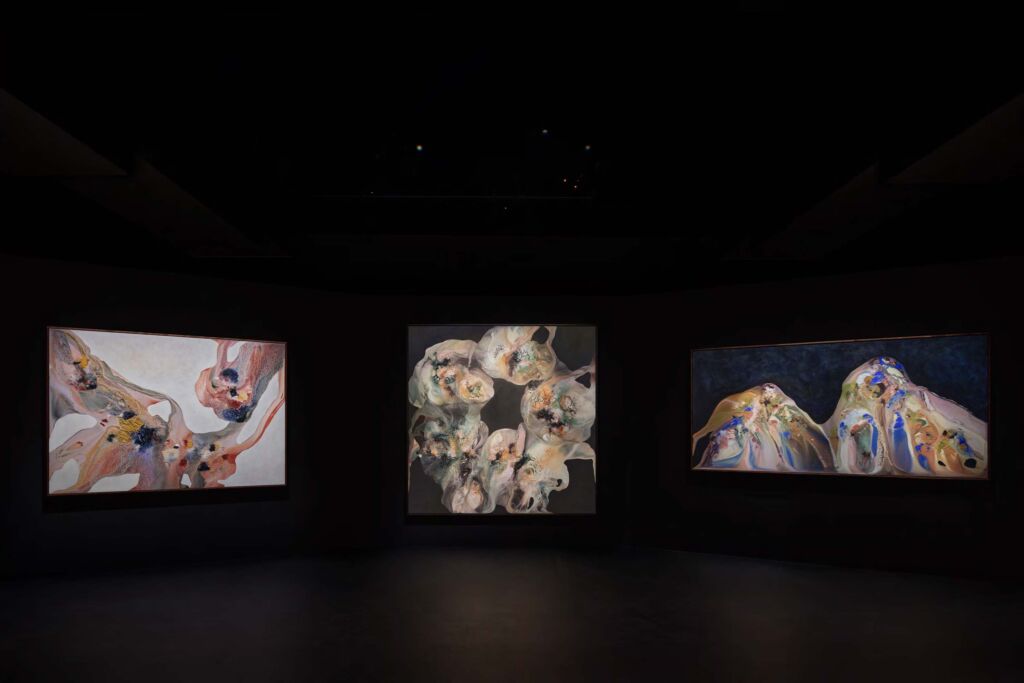
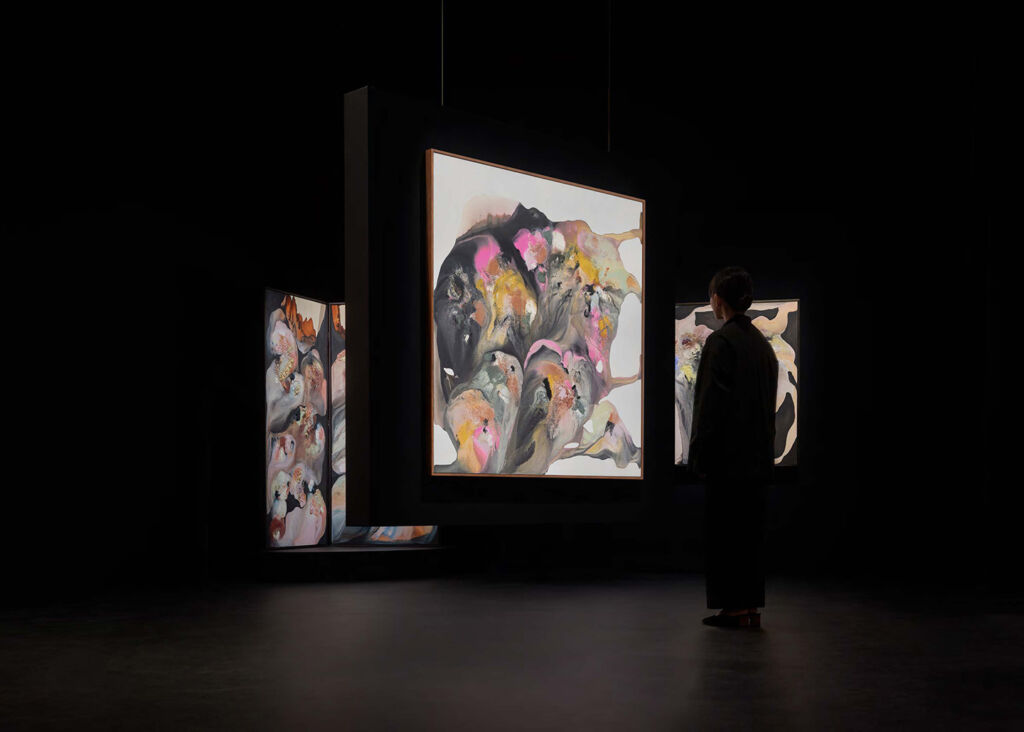
Dawn Ng, The Earth Laughs in Flowers, installation view, 2026. Photography by Jovian Lim
Sullivan + Strumpf is proud to present ‘The Earth Laughs in Flowers’, a newly produced body of work by Singaporean visual artist Dawn Ng.
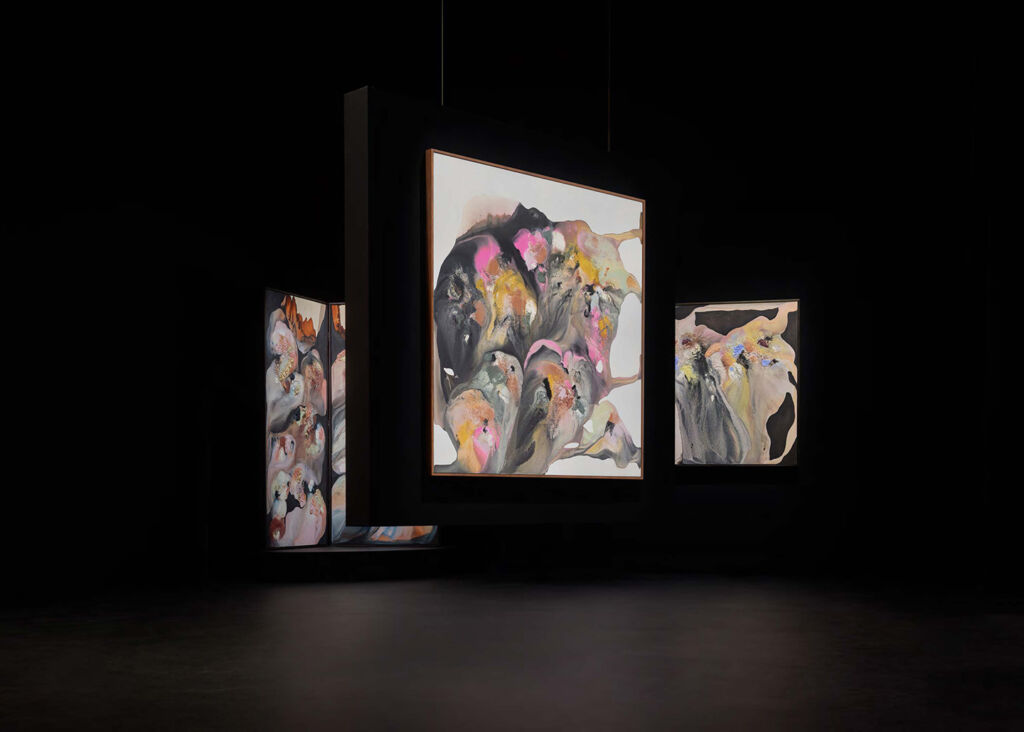
‘The Earth Laughs in Flowers’ is an ode to visual perspectives of the accumulated quotidian. The images we consume when walking through the streets, the newspaper headlines that flicker, that internet scroll, time with friends, the hint of a texture that catches our eye or an image sent by a loved one. In their infinite variety, there are two constants to these inputs: the month of the year, and oneself, the vessel of perception. Articulating this observational and at times mundane data, and distilling them, is Dawn Ng, who has created a visually abundant diaristic response through twelve paintings, one pertaining to each month. Setting out on a Herculean task, Ng expresses in a confluence of colour the myriad of synaptic connections we experience. Set in Singapore’s Repertory Theatre, this solo show sets the stage for encounters with Ng’s inner mind, and the tributaries of our own subconscious.
The first time I encountered Dawn Ng’s oeuvre was during lockdown. Our lives, as we’d known them, had globally changed. A universal haltering, or slowing down. In this moment of suspension, Ng reflected on how time speeds up when you’re having fun, slows down when you’re bored: she unravelled the intrinsic qualities to time as if it were a being, charged with emotion rather than simply numerology. Through this reflection stemmed a now near-decade-long investigation around the medium of ice. The most ephemeral material in Ng’s native Singapore, ice is charged with also references to childhood – that lolly, or cubes in a drink. In a land of eternal summer, its variable existence is noted, and disappearance quickly acknowledged. In a sense, it’s a foil for the nation’s spirit of renewal, in particular the swift replacement of older buildings, from homes to schools.
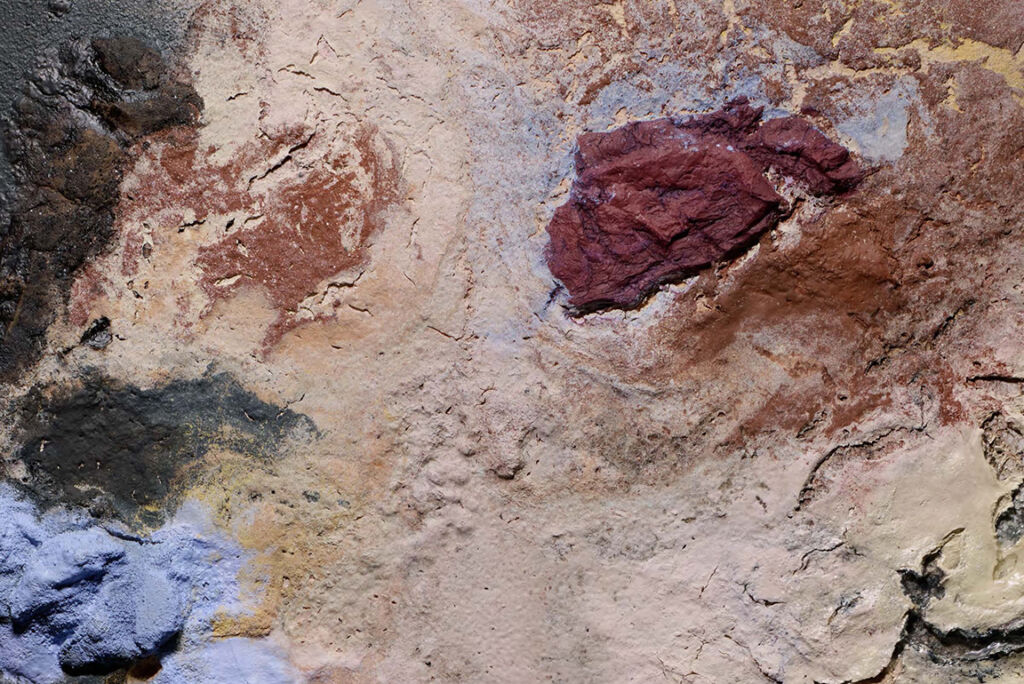
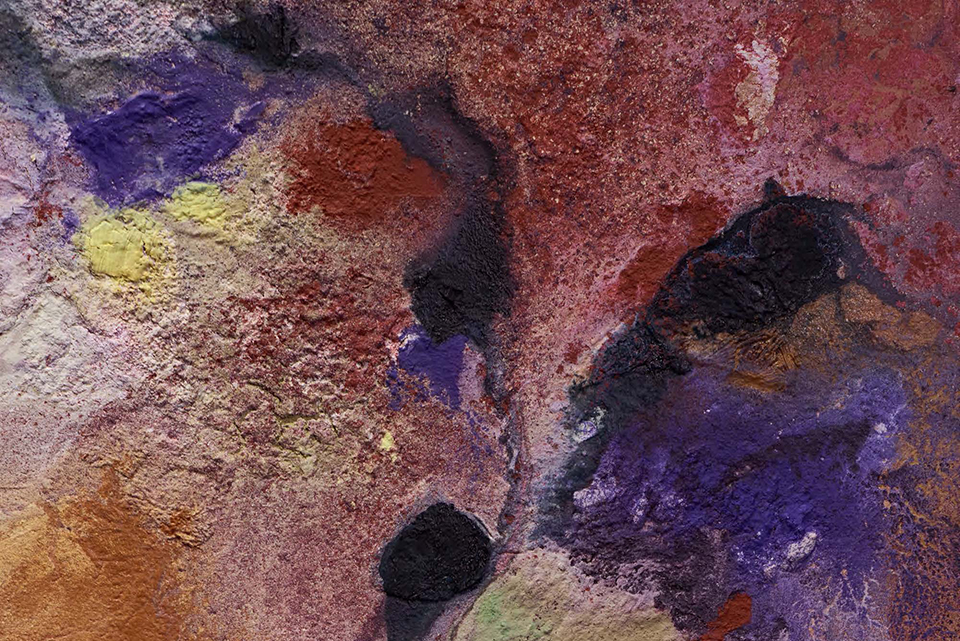
When gazing at the works in this exhibition there is an intrinsically cosmic quality, akin to casting our eyes on nebulae. As if collected from the Hubble telescope, the paintings harbour clusters, ranging in tonality from trails of sage to hints of pastel orange. Following from Ng’s previous series, ‘Into Air’, the paintings are created, as a starting point, by assiduously layering blocks of frozen pigments: watercolours, acrylics, dyes. For the ‘Earth Laughs in Flowers’, however, there are several key differences. In a first instance, Ng introduces sediment of different kinds, freezing materials such as grit and sand amongst the layers. In a second instance, instead of having the bricks melt and capturing the process as in her ‘Clocks’ series, Ng breaks them on the wooden boards, forming masses. Through a combination of the artist’s hand and ice’s inevitable fusion, the blocks melt, forming textured pools of agglomerated colour. Ng guides these, balancing formative chance with artistic intention. The result is one where the pools connect, and the in-between space is filled; in ‘January’ (2025), for example, a near-black sea heightens our celestial feel, connecting the islands of colour, drawing parallels with dark matter: that which interconnects, in our universe, star-forming pillars of gas and dust.
In this conceptual and procedural approach, Ng aligns herself with the world of process-driven abstract painters; ones for whom value is in the gesture, rather than the descriptive output. Even in the creation of negative space in these paintings, which brings Ng’s works into the realm of non-representational and biomorphic figuration, we can draw an analogy with Jackson Pollock, in particular his ‘Cut Out’ series. Crucially, for Ng, and further artists such as Helen Frankenthaler, emphasis is on fluidity and spontaneity: describing and articulating landscapes or biological life without directly representing them. One could say that in Ng’s affinity with the natural world, she treads in the field of Land Art, where natural material is used in the creation of the ‘canvas’, from rocks to soil and plants. In effect, each painting has the intrinsic qualities of this movement, including a focus on process and use of natural materials. And while each painting is not site-specific, the ‘The Earth Laughs in Flowers’, as an exhibition, is. As a show and an installation, it responds to a particular site – that of an active theatre – and through lighting and display enters the realm of experience and encounter.
Ultimately, Ng’s work acts as a lyrical portal or thread between different worlds: a connector. Between deep historical times and our very present; our Earth and the wider celestial Cosmos; the myriad of information and inputs one might witness or experience on a given month; our physical presence to digital footprints; the realms of two major twentieth century art movements. It connects our minds and our instincts, the bodily and the emotive. In a world where the constant is change and movement, ‘The Earth Laughs in Flowers’ leans into the temporal spectrum of shifts and highlights how we all have something that’s idiosyncratically ours: our time, how we use, and appreciate it.
Words by Jenn Ellis
The exhibition opens on Wednesday 21 January and includes an artist talk on Saturday 24, before entering its final days on the 29 January 2026.
Dawn Ng and Jenn Ellis: Letters Across Time
‘I think of memory as a form of residue, and vice versa, residue as a form of memory. What an object or matter can leave behind is evidence that it ever existed.‘
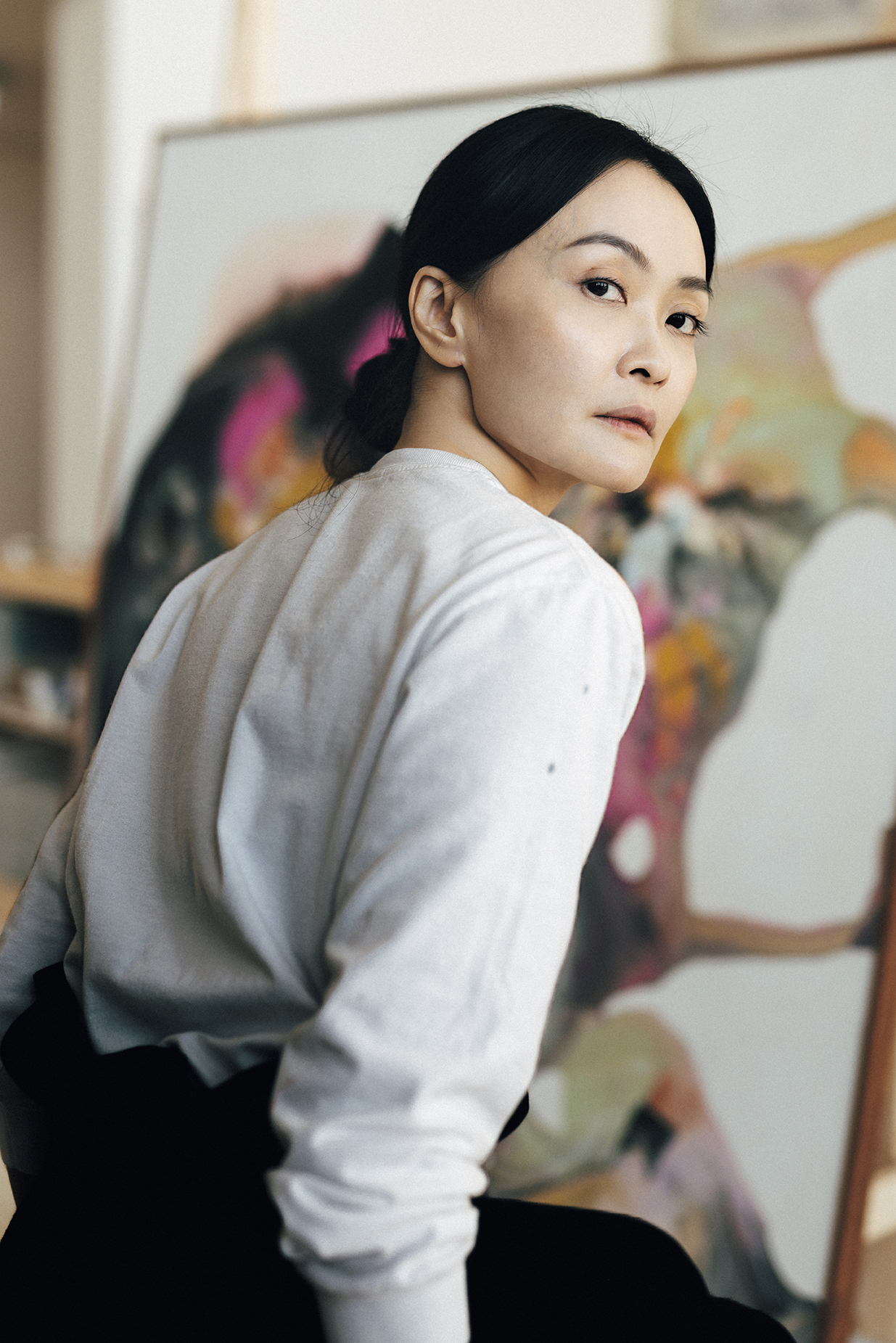
Dawn Ng
The Earth Laughs in Flowers, I just love that line. When human beings consider the earth, in relation to time, we think we own it. We divide land, we parcel it, we sell it, we maximise its productivity and value, in the exact same way we treat time. But ultimately, the earth has its last laugh because we go right back into it. It is this image of brutal beauty, and the earth having its last laugh, that it spits us back out into something as innocent, and defiant, and glorious as a riot of flowers.
Jenn Ellis
Even wisteria sufficiently looked at will do for a galaxy. Nebulae coil and flare on the trellises of invisible principle, much as these gnarls and burls grow to a house they obliterate. With care then, with waiting for a leaf to turn, you may see the lives take place in the great gaps of the system.
DN
From where I am, time moves in a strange way. I guess because Singapore sits just off the equator, we are mono climatic and geographically, we don’t experience the four seasons that other parts of the world would experience, and that has an impact on how time moves, or seems to play on repeat.
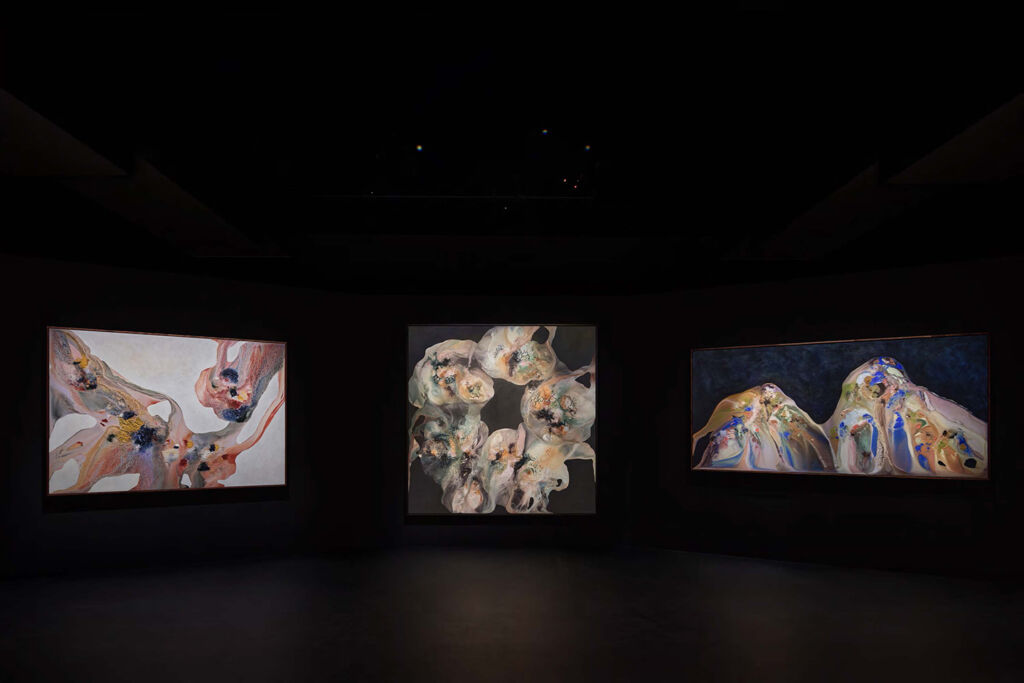
Dawn Ng, The Earth Laughs in Flowers, installation view 2026. Image courtesy of Jovian Lim
JE
The first time we spoke, time literally had stopped in the world. We were in lock down and it unlocked something for you about time.
This interest in exploring time not just through numerical terms, but through colour, shape, form. This incredible elasticity which is finely interwoven with memory and emotion. We also spoke about how one could hold time, or contemplate it, and from there, there was this thinking around materiality, exploring it. You had this practice with language, with geology, and the evolution to using ice, which is the most ephemeral material available in Singapore was a very interesting and poignant next step.
DN
I’ve been working with ice for 8 years now. What led me down this rabbit hole was this desire to look at time and give it a color, shape and form beyond you know, numbers, and I began looking at the most ephemeral material in the context of my own environment. Ice has such a magical quality, especially when you come from a tropical part of the world, because it’s just this mythical, scintillating, magical object that cannot stay, and the minute you take it out of its artificial freezer environment, it starts to vanish and disintegrate in your hands. And there’s something in that arresting transition of its form. It’s weeping and bleeding out that is full of resplendence. For me there is an urgency to capture that disintegration or that disappearance of matter across photography, film, and ultimately, now painting.
JE
When I consider time and geology in your work, I think of the Alps, which is the mountain range right next to where I grew up.
I think of the glaciers and how in their creation, they are layered but also very rapidly being destroyed or eroded by changes to our climate. I think of the tension between nature being nature over millenia, and our development as humankind, and that tension between nature and what we consider development.
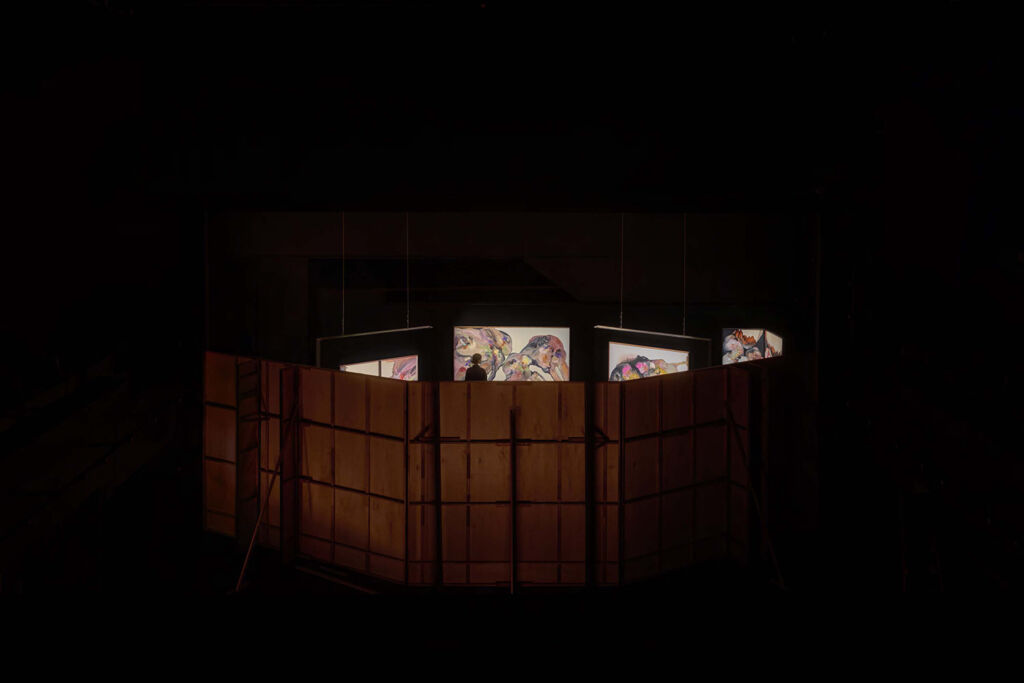
Dawn Ng, The Earth Laughs in Flowers, installation view 2026. Image courtesy of Jovian Lim
DN
When I look at satellite images of Earth, and I’ve been looking at them for some years now, it never fails to blow my mind, just the sheer intensity of colour, texture, and stratification that saturates the entire Earth’s surface. That kind of expanse is just marvelous and the most thrilling part is this feeling of being so small and insignificant.
JE
I also think however of other natural wonders, like Yellow Stone, National Park, where there are these tones of copper, ochre, hints of blue, purple, where visually they are so astoundingly beautiful yet the heats that radiate from these sulphuric pits, over to their olfactory components. Its geology that is not static, and I think that applies to your paintings too. These are not paintings that are static, they are moving, they are sensorial, they follow you not just your gaze but your body.
DN
The more I delved into research on time and geology, it became apparent to me that all landscapes – be it a mountain or gorge, are a result of five mains forces: Time, heat, wind, water and gravity – and it made me think of this process of mark making – both on a planetary scale but also the scale of my canvas. I became obsessed with this idea that a canvas could be this sort of micro planet , and that I could orchestrate a way to make paintings by controlling those same five forces.
Dawn Ng, The Earth Laughs in Flowers, installation view 2026. Image courtesy of Jovian Lim
JE
When we think of geology, we think of something that is held and solid, and your works have that but actually it’s a bit more delicate than that. Rocks are formations, and formations that are happening slowly, patiently, and if sped up, it’s typically sped up by humanity. And if we draw that analogy over to your paintings, they are slow and steady, there is a respect for not skipping moments of process, and then at the end when the blocks are melting and they are creating their own unpredictable swirls, I think of avalanches or rock cascades yet then there are moments when that’s guided, and where they could go is slightly sped up or orientated, or collaborated with.
DG
I would compare the lead up to painting much like planning a domino. For things to fall a certain way, or fall into a certain place, it actually requires an OCD and pretty psychotic amount of planning and perfectionistic rigour upfront, so that a spectrum of factors would all dovetail towards a desired outcome which is, you know, the artwork itself.
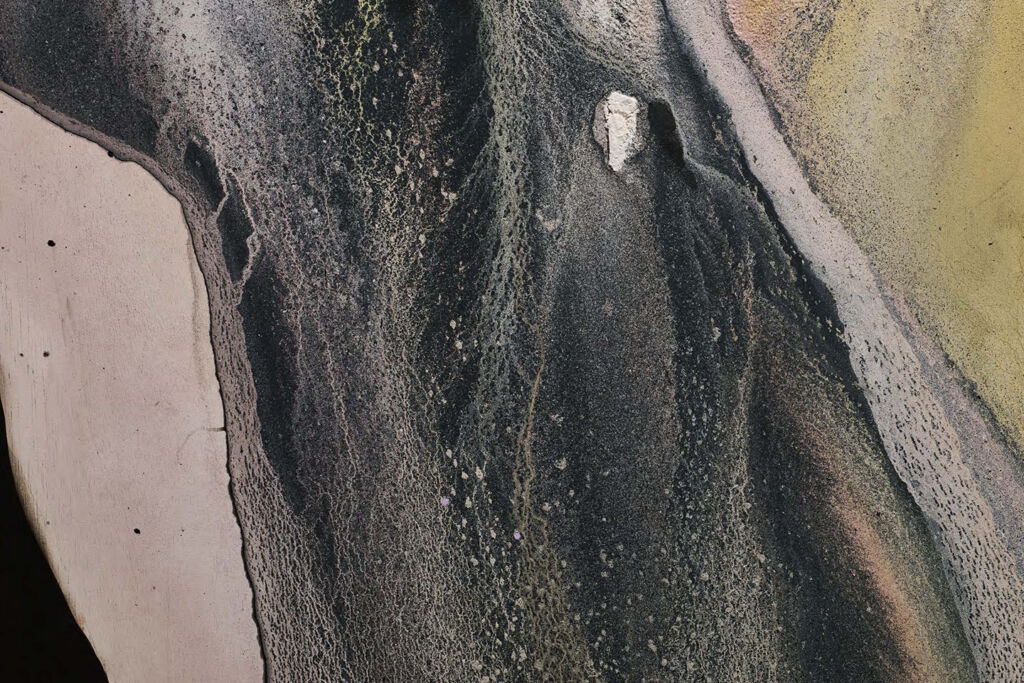
It takes a month to build a compound block of acrylics, inks, dyes, watercolours mixed with sand. Sand is used not just for its textural quality that results in quite a sculptural finishing in the painting, but also because it lowers the freezing point of water that it’s being mixed with. When the block is ready, it kind of resembles this giant KitKat bar of stratified stone. That’s when I shatter that bulk into different conglomerates. Big, medium, small, granular – I sort them out in a way that I guess, a geologist would sort out rocks. Then I would apply specific rocks in clusters, and plot and plan them according to a mapping of how I envision a flow to go.
JE
I think also the fact that the ice wasn’t something that’s just purchased, it’s something that you built, and you create, that you layer. One layer of acrylic, or watercolour, or dyes after another. It’s an assiduous and near-scientific process, knowing at what rates different concoctions will freeze and melt, logging all of that, being incredibly precise and fastidious yet equally explorative.
DN
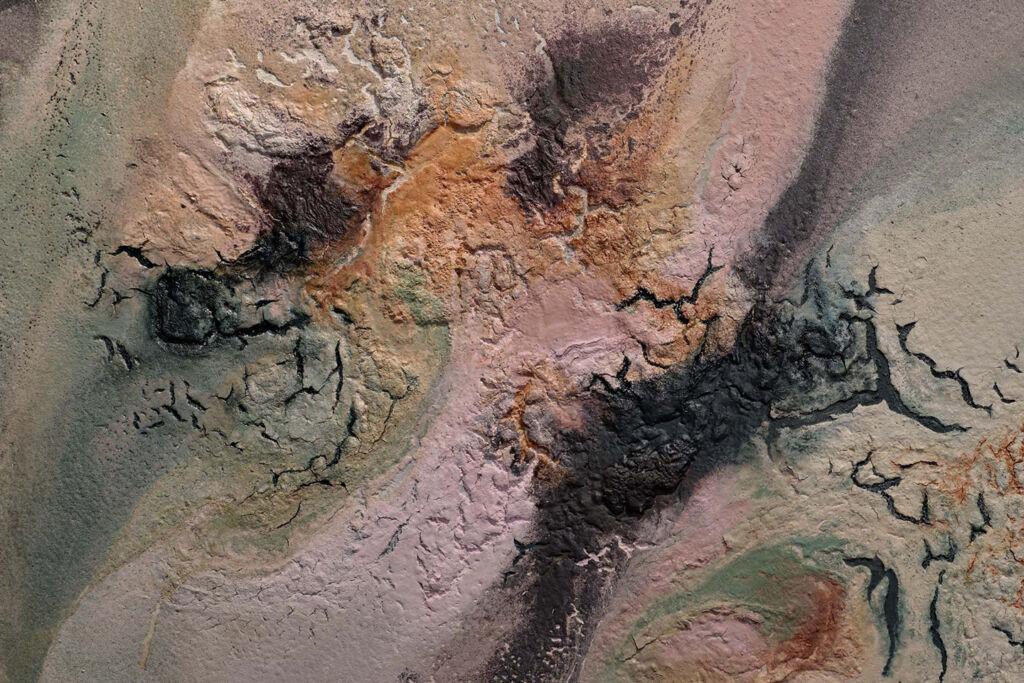
Here’s when those five principles of time, heat, wind, gravity, and water kick in. We’re talking about heat lamps, fans, ramps, that allow me to control the flow and bloom of melting paint. Of course, there are often times where I intervene with paint brushes and sponges to shape the flow. But as the hours progress, it’s about introducing secondary parcels of pure pigment that anchors certain islands of colour.
JE
When I consider process-driven painters like Jackson Pollock, Helen Frankenthaler – I think about the freedom they feel with regards to the material, how it doesn’t have particular bounds, and in a way is allowed to be.
DN
This is when the painting process becomes incredibly dynamic and reactionary – it’s basically a dance of dominance and control between what I am trying to do and what is happening in front of me.
Dawn Ng, Courtesy of Toni Cuhadi
JE
There is this constant discovery and re-discovery of material, what can be done with it. How it can be re-articulated. I also think about this relationship with childhood, from the second we go into the schooling system, we are taught how things should be done, the rules, the methods, and I think the beauty that draws us to process-driven painting is how it defies those modes and lets you return back to that instinct.
DN
I use the final month once the painting has fully dried to then do that final outlining and adding in of negative space, which I think you know is so incredibly important to set the painting, otherwise it feels like its energy is un-harnessed, and in that way its beauty is also unharnessed.
JE
So in this midst of time being upheld, I see that it was a moment for you to consider it at your own pace, from angles that perhaps one would not necessarily consider, and definitely it was an opportunity to have time in the making process. For it to be a journey, not just a trip. A constant evolution, a refinement, an investigation in a world that’s so obsessed with output and production.
Dawn Ng, The Earth Laughs in Flowers, intallation view 2026. Image courtesy of Jovian Lim
DN
When I think about time in the context of this series, I think about time specifically relating to 2025. In many ways, this body of work was an attempt to time capsule a year in quite a diaristic way, broken down into months of colour, shape, and form, all of the images that fill my eyeballs – ranging from the environment, media, books, films, things that I photograph, things I absorb throughout the minutes and seconds that make up the everyday.
JE
To encounter time as an articulation of all the various inputs that we receive on a daily basis, how can we articulate time through our own individual epistemology? In a language that is on the one hand visual but also archival. Each month of each year looked so different to each of us. What is that we’ve planted, what has been grown, what are the flowers that have held court and survived in our individual gardens.
DN
The painting January alone is dominated by 2 specific images from media. One is a photograph of Singapore in January when we experienced incessant rain and torrential flooding and the island was kind of steeped in this inky hue of of dark blues and greys; while on the opposite side of the world, the images of the LA forest fires had an apocalyptic brilliance and devastating beauty about it… these orange, pink and clay hues that washed over their entire city. Both presented into the cracks and crevices and billowing paints that coagulate into the painting from that month.
Dawn Ng, Courtesy of Toni Cuhadi
JE
I see these paintings as visual diaries, articulations of the impossible. How to describe the infinite things that we have seen, felt, received, collected, archived in the course of a month. When I look at these paintings, I see this incredible ability to distill, reflect, consume, compound, and then in a way it be its own thing.
DN
When I started on the first painting, I could see the entire series only in darkness. Simply because I had thought about time in the context of planetary movements, and that a year, if you were to break it down, is just the trajectory of the Earth going one complete round around the sun. If you were to break that down further – then time is not just about movement, it’s about the positioning of heat. It’s this exchange of energy and tension that ultimately occurs in the paintings as well.
I think this series is a consideration of time as mark-making, time as residue, time as things that are left behind in the essence of memory. The paintings are neither literal nor figurative but they mirror that quality of memory in its amorphousness… balanced out by these poignant, punctuated and vivid details.
JE
When I look at these paintings, I see stars, I see universes, I see black holes converging.
I see the imagery that’s collected by astronomers and physicists as they seek to explain the origins of the universe. I see geological formations, ones that have been around for millennia.
I see both beauty bursting, flowing, growing, and I also see decay.
It was interesting to think about something being built up over weeks to then just break and cascade and disappear, there is this analogy to life and rebirth, nodding to the reality that as soon as we’re born, we’re in fact passing.
It’s as if in this moment when time was being upheld, you were going deep, and you were going back to the very core of how time nowadays is read, whether you think of scientific exploration in the North or the South pole, using ice as a way of telling and denoting deep time, as a way of informing our present and our future.
Dawn Ng, Courtesy of Toni Cuhadi
DN
I think of memory as a form of residue, and vice versa, residue as a form of memory. What an object or matter can leave behind is evidence that it ever existed.
JE
“Goodbye,” he said.
“Goodbye,” said the fox. “And now here is my secret, a very simple secret: It is only with the heart that one can see rightly; what is essential is invisible to the eye.”
“What is essential is invisible to the eye,” the little prince repeated, so that he could be sure to remember.
“It is the time you have wasted for your rose that makes your rose so important.”
“It is the time I have wasted for my rose–” said the little prince, so that he could be sure to remember.
“Men have forgotten this truth,” said the fox. “But you must not forget it. You become responsible, forever, for what you have tamed. You are responsible for your rose . . .”
“I am responsible for my rose,” the little prince repeated, so that he would be sure to remember.”
Dawn Ng is a multidisciplinary visual artist who works across a diverse range of mediums, motifs, and large-scale installations. Her practice investigates concepts of time, memory, nostalgia, and temporality. In her most significant and ongoing body of work, “Into Air,” Ng incorporates ice— the ultimate ephemeral material in the tropical climate of her native country—to articulate time’s shifts and nuances, through a series of paintings, films, photographic prints, light boxes, and performance. Often characterized by visual and emotive connections to landscape and geology, Ng’s work explores time’s transience through markmaking in a resplendence of color, texture, and detail. To date, the artist’s work has been collected and commissioned by various international institutions and museums across Asia, Australia, and Europe.
Jenn Ellis is a Swiss-Colombian curator based in London, after five years in Hong Kong. She founded curatorial studio Apsara in 2021, focusing on global artistic dialogue around themes like time, ecology, and heritage. Her collaborations include Dawn Ng, Edgar Calel, Ikon Gallery, and the Michelangelo Foundation. In 2024, she was appointed Frieze x Breguet curator, leading projects on ‘evolutionary change.’ Co- founder of the virtual platform AORA, her work has been featured in Art Newspaper, BBC, Vogue, and Forbes. She became a Fellow of the Royal Society of Arts in 2018 and holds a History of Art degree from Cambridge.
Sullivan+Strumpf is a leading contemporary art gallery with spaces in Sydney and Melbourne, and itinerant programming in Singapore and London. Founded in 2005 by co-directors Ursula Sullivan and Joanna Strumpf, the gallery is committed to presenting a dynamic exhibition program, representing over 40 engaging and culturally significant artists and estates from across the Asia-Pacific.With unwavering dedication to a progressive and compelling schedule of over 30 exhibitions annually, Sullivan+Strumpf has helped foster the careers of some of the most prominent contemporary artists working in Australia, Southeast Asia and beyond. As a complement to the diverse and innovative exhibition program, the gallery publishes a bi-monthly magazine; hosts public talks and participatory workshops; and partakes in key national and international art fairs. Regularly consulting to major public and private museums, Sullivan+Strumpf acts in an advisory capacity to public and private collections internationally.