
‘Holding Both’
Maria Hatling & Paloma Tendero
Presented by Apsara
20th – 25th April 2026. Apsara Studio, 200 Battersea Park Rd, SW11 4ND London
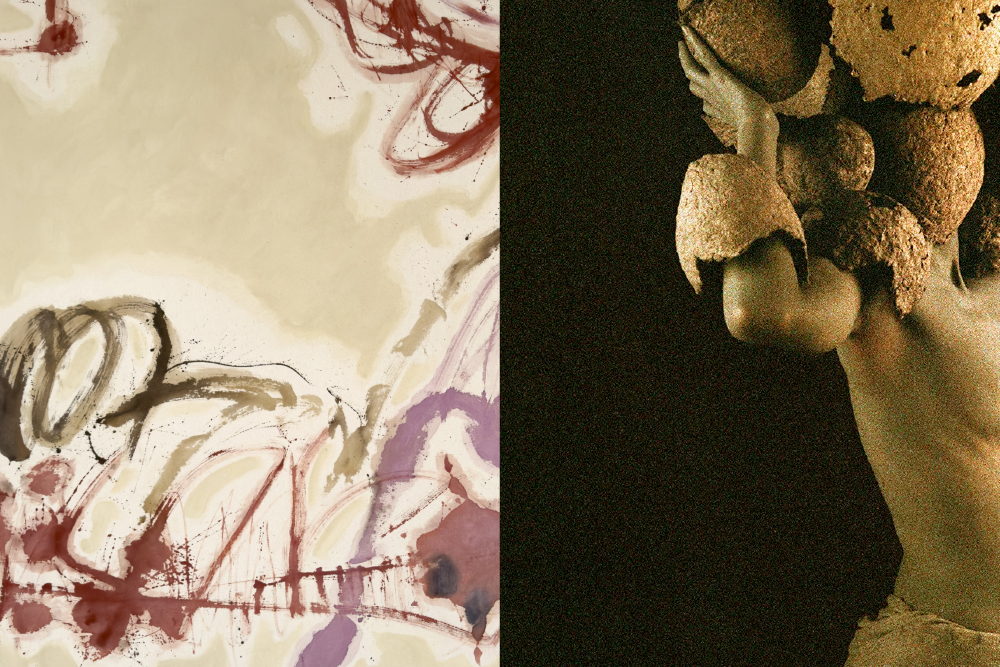
Left: Maria Hatling, A million dreams, 2026. Acrylic on canvas. Diptych. Right: Paloma Tendero, On Mutability Series 2019-2020. Hand-printed analogue C-Type photograph.
Apsara Studio is proud to present Holding Both, a dialogue between artists Maria Hatling and Paloma Tendero. The dual show navigates the intertwined pressures of biology, autonomy, and belonging. Through their work, they explore inheritance, identity, and fertility, addressing both sides of reproductive decision-making and the ways we carry what is passed down. Their practice seeks to visualise the emotional spaces surrounding biology, memory, grief, and the legacies that shape womanhood. It holds multiple truths at once: motherhood as both fulfilment and loss; childlessness as both freedom and ache. Across biology, memory, and emotion, these legacies inform womanhood, belonging, and choice.
Holding Both examines what it means to inherit, not only through DNA, but also through love, care, remembrance, and the quiet transmission of values and wounds across generations, and how these inheritances shape the decisions we make when considering motherhood. Maria’s work explores the emotional aspect of inheritance and the complexities of motherhood, adoption, and care. Through painting, mark making and layering, she captures the memory of handwriting to address grief and tenderness. There is a tension between control and chaos, love and loss, as shifting expectations around motherhood and care emerge.
Paloma’s work centres on the body as a vessel of biological, cultural, and emotional inheritance, examining how knowledge of genetic history shape’s identity and agency. On Mutability explores the body as a living archive, a fragile and ever-changing entity marked by mutation and transformation. Using recycled egg cartons, she reimagines fertility and creation as acts of adaptation rather than ideals of perfection. Her work questions dominant notions of health and the “perfect” body, reflecting instead on transformation, fragility, and the politics of representation.
Maria Hatling & Paloma Tendero Interviewed by APSARA
‘The support we have given each other since we met has been really important. We have stayed curious, encouraged one another and found ways to grow our practices, both in terms of ideas and materials.’
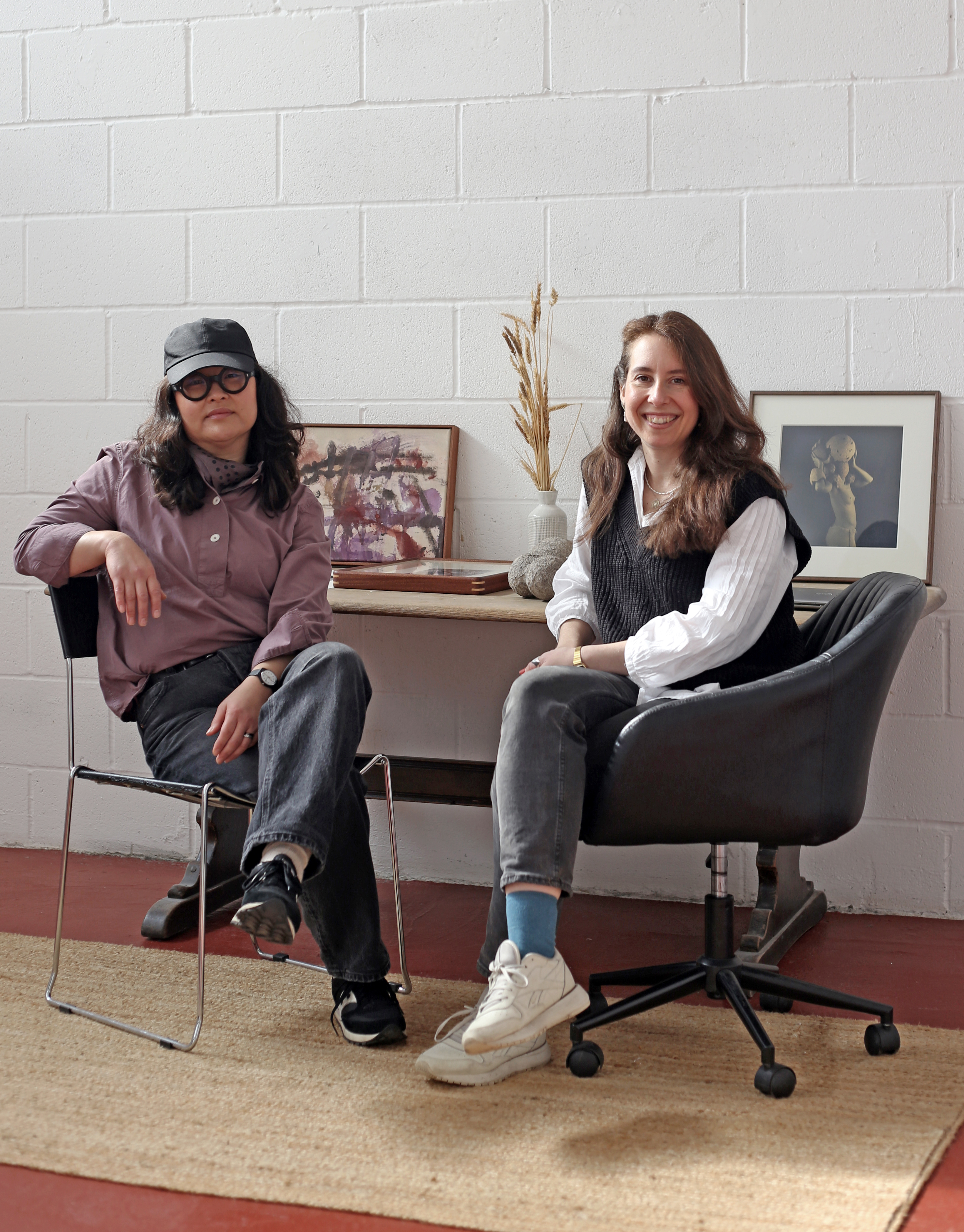
Maria, Paloma, could you tell us how you first met? At what point, in getting to know each other’s work and stories, did you realise there was something there that could grow into a shared exhibition?
We first met at the Xenia residency retreat in 2024. We walked in the countryside and had studio visits. This environment naturally invited us to open up and reflect on our practices, and our conversations quickly moved beyond the surface. As we spoke, we began to recognise unexpected resonances between our experiences of inheritance and how they shape a sense of self and family history.
What felt significant was not a shared narrative in a literal sense, but a kind of echo between us. Our personal experiences and our relationships with family and inherited illness began to align in subtle ways – Maria’s experience of adoption and her relationship within her adoptive family brought forward questions about belonging, proximity, and what it means to inherit something that is not biologically “yours,” in contrast with Paloma’s experience of inheriting a chronic illness passed down through generations. The collaboration became a way of holding these perspectives side by side.
The idea of making an exhibition together did not arrive all at once, it emerged almost naturally, about a year after we first met, as our conversations lengthened and our friendship settled into something lasting and meaningful.
In Holding Both, you speak about motherhood, non-motherhood, inheritance, the body, memory, and grief without resorting to fixed or definitive answers. How have you given shape to all of this in the works you are presenting, and what kind of conversation emerges between them within the exhibition?
Inspired by our lived experiences, we have developed a deep empathy for and understanding of the fragile nature of bringing life into the world. By offering our stories through our work, we have found it incredibly moving that others, in return, feel comfortable sharing their own, often complex and non-linear, journeys toward choosing to become parents, or not.
Rather than presenting fixed narratives, each piece in Holding Both operates as a space for reflection, capturing the fluidity, ambivalence, and emotional nuance of these experiences. Some works explore the physical and psychological traces of the body, or the ways memory and grief linger in inherited histories. Others reflect on choices around motherhood, challenging societal expectations and highlighting personal, often contradictory truths.
Together, the pieces enter into a conversation across the exhibition: they echo, contrast, and resonate with one another, forming a network of perspectives where absence, presence, and possibility coexist. The viewer becomes part of this dialogue, navigating these tensions and ambiguities, and discovering that the “answers” are not singular but relational and ongoing.
Working together from such a personal place must have required not only artistic affinity but also a great deal of trust. Do you feel that, through this process, the collaboration allowed you to reach places you might not have arrived at on your own?
Trust is something that has developed quite organically between us. Since the moment we met, we felt we could trust one another, and sometimes that’s rare in adult friendships. We have created a space where we can both be ourselves and allow our work to grow and explore intimate themes without fear. The collaboration has definitely encouraged us to reflect differently on the work, pushing us to think more carefully about how meaning is held and communicated, and how many of us navigate similar paths without sharing the complex ideas behind becoming parents.
At the same time, it offers a space where things can remain open, unresolved, or ambiguous, exactly as decision-making often is. In that sense, the collaboration didn’t just deepen the subject matter; it expanded the ways we could approach it, both individually and together.
The support we have given each other since we met has been really important. We have stayed curious, encouraged one another and found ways to grow our practices, both in terms of ideas and materials. That kind of support can make a big difference, especially in what can often be quite a solitary way of working.
Although we both have strong support networks, there’s something about coming from different disciplines that has made this exchange feel particularly open and easy. We have been able to challenge and encourage each other, blending our ways of working while also maintaining accountability for how the work develops. Sometimes certain encounters just stay with you and are pivotal. For us, meeting at Xenia, in North Hampshire, coming from Norway and Spain, is perhaps one of those experiences.
How do painting, photography, and sculpture connect in the exhibition, and how do your two practices work together?
In Holding Both, we bring together two distinct practices that approach image-making and materiality from different directions. Maria’s painting and experimental printmaking operate through gesture, surface, and the slow accumulation of marks, while Paloma’s photography and sculpture engage more directly with the physical world through capture, framing, and the presence of objects in space. This contrast creates a dialogue between interpretation and documentation, between something constructed by hand and something derived from lived reality.
Within Holding Both, these approaches shape a conversation around perception and memory. The paintings feel subjective and inward, translating experience through colour, texture, and abstraction. In contrast, the photographs and sculptural elements introduce a sense of immediacy and tangibility. They anchor the exhibition, offering points of reference that the paintings then expand, distort, or emotionally reframe.
Rather than opposing each other, our practices operate as complementary modes of seeing, one intuitive and interpretive, the other observational and material. We believe that the works in this exhibition sit alongside one another in a balanced tension: the paintings create atmospheric space, encouraging slower looking and emotional response, while the photography and sculpture punctuate that space with clarity and physical presence. We hope that this juxtaposition allows viewers to move between reflection and recognition, abstraction and form and that a part of the takeaway experience for the visitors is a sense that together, the pieces do not compete but that they instead hold multiple perspectives at once, reinforcing the exhibition’s central idea of coexistence, of holding different ways of seeing at the same time.
Thank you so much both!
Maria Hatling is a South Korean–born, Norwegian–British artist based in London. After more than a decade working in fashion and design, she transitioned into a full-time studio practice five years ago. Working across painting, etching, and monotype, her practice explores identity, fertility, and motherhood through personal and intuitive mark-making. Adopted from South Korea to Norway as an infant, Hatling’s artistic sensibility is deeply influenced by her Scandinavian upbringing and connection to nature, evident in her restrained palette and deliberate gestural language. She often disrupts expectations of scale and tool, using handmade brushes, hardware-store finds, and domestic objects to create work that balances immediacy with quiet depth. Hatling has exhibited in the UK, Norway, and France, with work held in private collections in Europe and the United States. Recent highlights include training with master printer Rob White at Hausprint, participation in the Xenia residency, and commissions for Tate Modern, Tate Liverpool and The Artists Information Company.
Paloma Tendero is a visual artist working across photography, sculpture, and mixed media. Her practice explores genetic inheritance, illness, and the ways in which the body carries histories that shape identity and the timelines of life. Inspired by her personal experience with genetic illness, she examines how inherited narratives influence both physical embodiment and cultural ideals of the self, often using her own body as a subject to reflect on states between wellness and sickness, the politics of representation, and the notion of the perfect body. Tendero graduated with a BA in Fine Arts from Complutense University in Madrid and an MA in Photography from London College of Communication. She has undertaken residencies such as Xenia residency retreat (2024) Sarabande, The Alexander McQueen Foundation, London (2020), and KulturKontakt, the Austrian Federal Chancellery AIR, Vienna (2018). Her work has been exhibited internationally, including Cavour Gallery in Padua (2019), Arnolfini Arts Centre Bristol, UK (2021) and most recently at PhotoLondon and at the University College London Hospital (2025).