
‘Correspondence’
Tomas Spicer
Presented by Apsara
11th – 15th March 2026. Apsara Studio, 200 Battersea Park Rd, SW11 4ND London
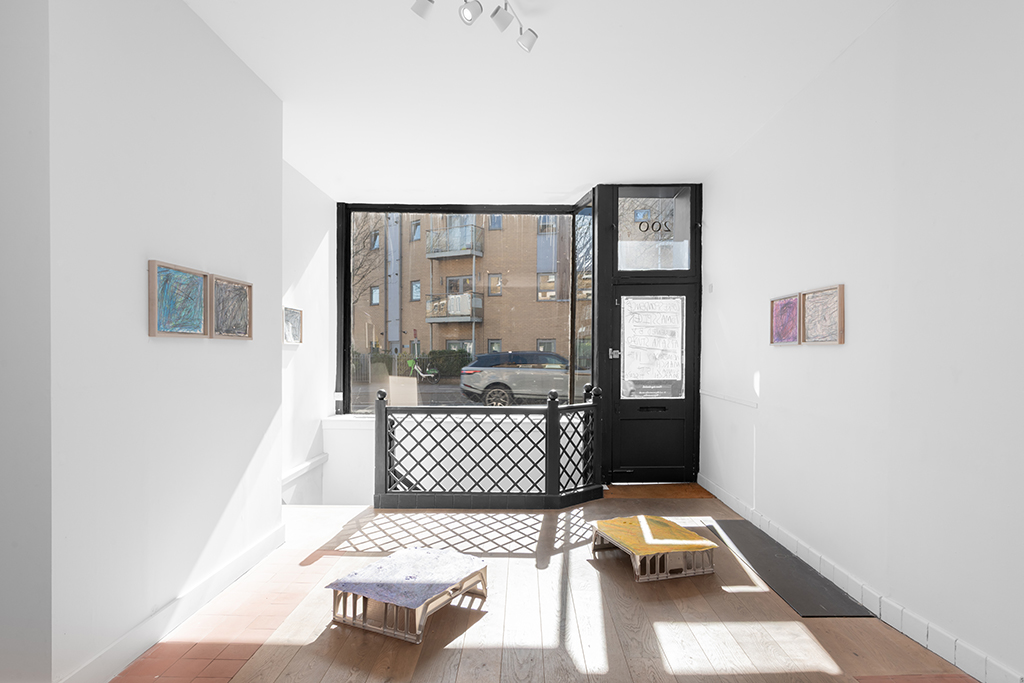
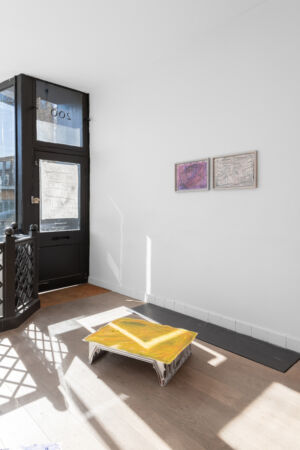
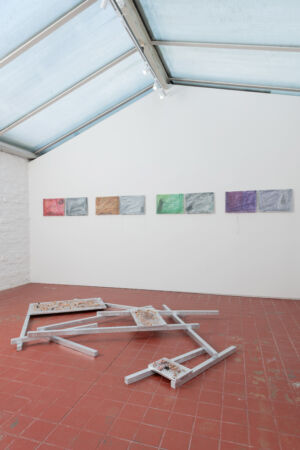
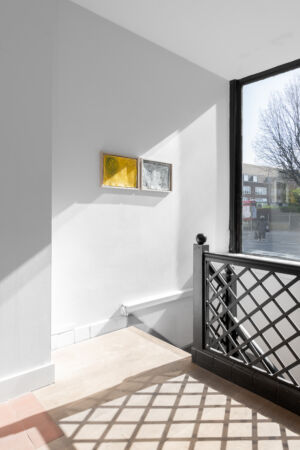
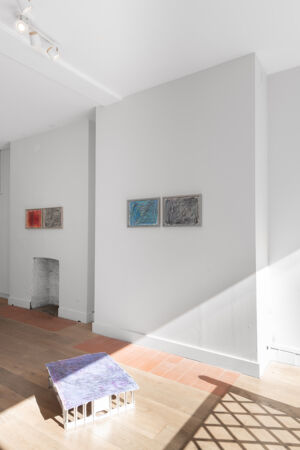
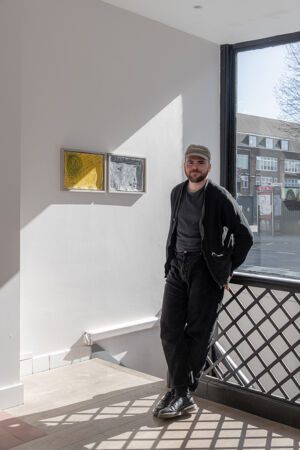
Correspondence, 2026, installation view. Apsara Studio. Image by Studio Adamson.
Apsara is proud to present Correspondence, a solo show by artist Tomas Spicer. The exhibition weaves together ongoing concerns in Spicer’s practice, including biography and lived experience, mark-making, and the politics of display. These concerns are understood in relation to how meaning is produced, communicated, and circulated.
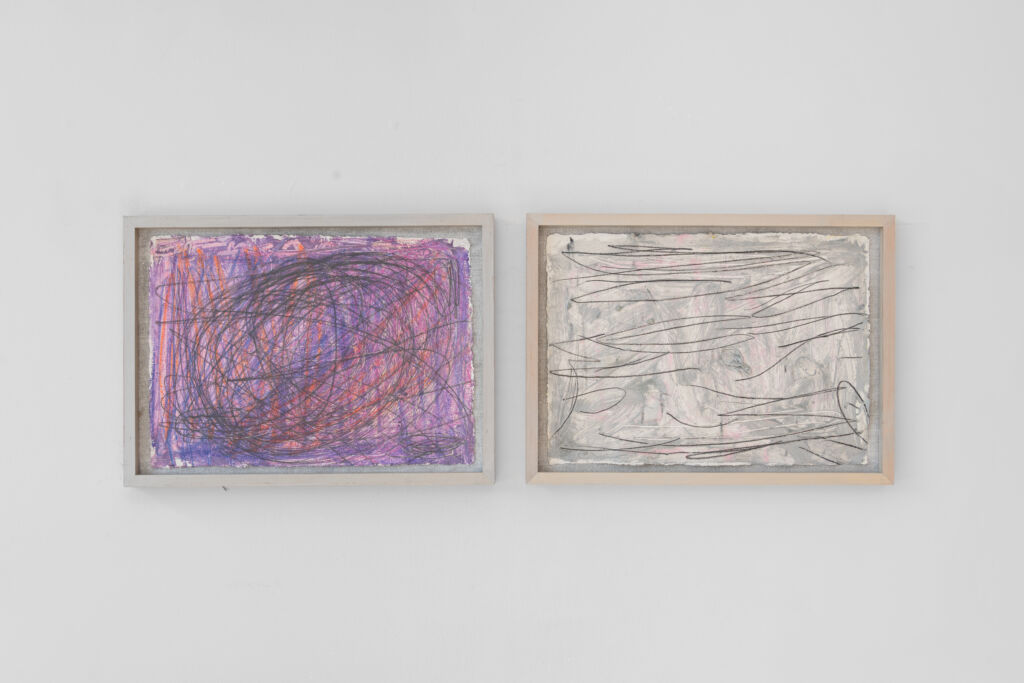
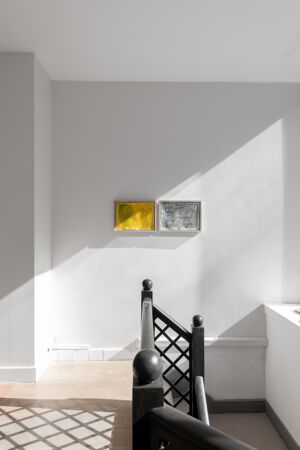
Untitled 020,021 (Deptford, London UK) pencil, and oil on cotton rag paper with artist frames. 37 × 94 cm (diptych). Image by Studio Adamson.
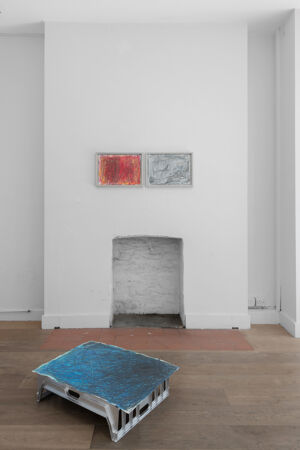
All works are considered forms of drawing, extending beyond traditional definitions to include supports, structures, and spatial interventions. Drawing operates here as an alternative literacy, allowing for ways of thinking and communicating that sit alongside, or resist, dominant linguistic systems.
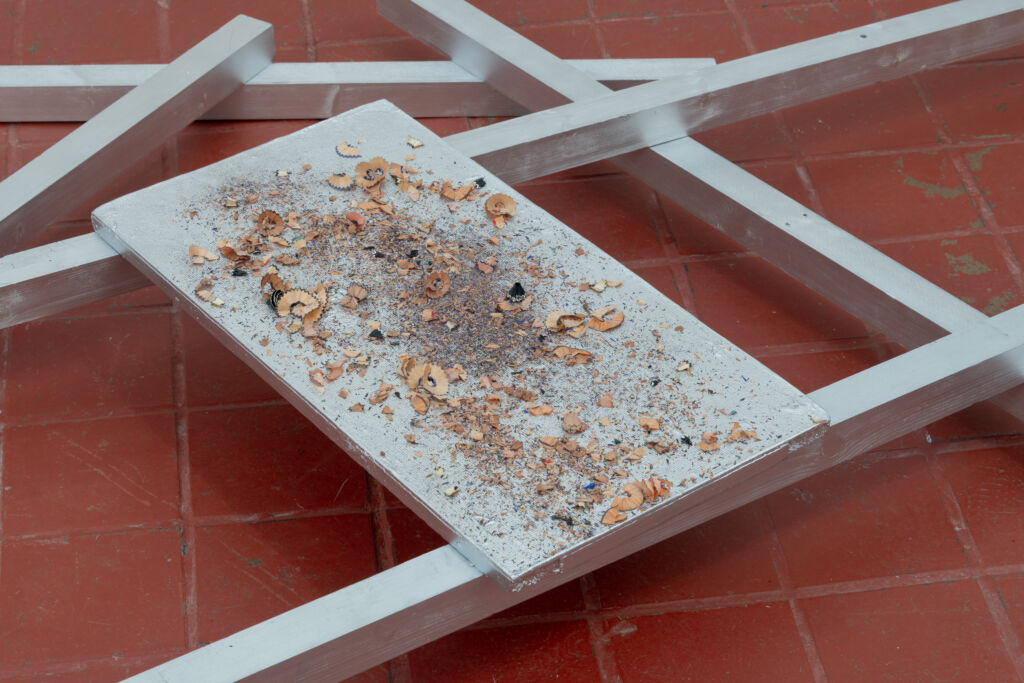
Correspondence, 2026, installation view. Apsara Studio. Image by Studio Adamson.
The project is informed by a number of conceptual touchstones, including Russian Constructivism (particularly its use of scaffolding, provisional structures, and supports), Paulo Freire’s Pedagogy of the Oppressed (dialogue, critical consciousness, and learning as a shared process), and notions of the home as a site of cultural production. These references are not fixed frameworks but working ideas that will continue to evolve through the process of making and installation.
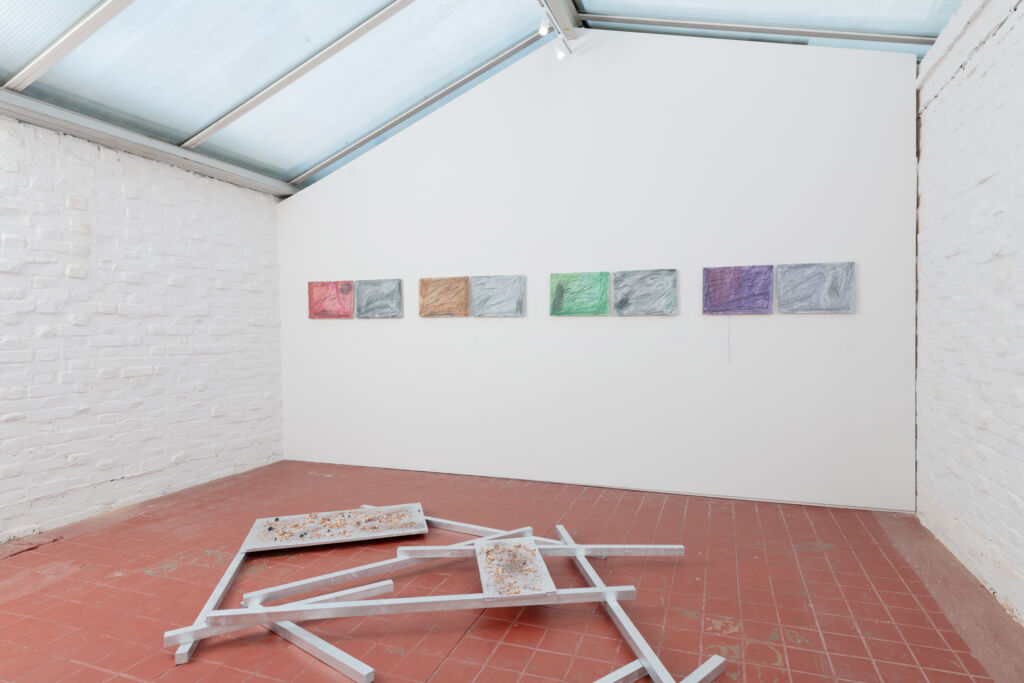
Correspondence, 2026, installation view. Apsara Studio. Image by Studio Adamson.
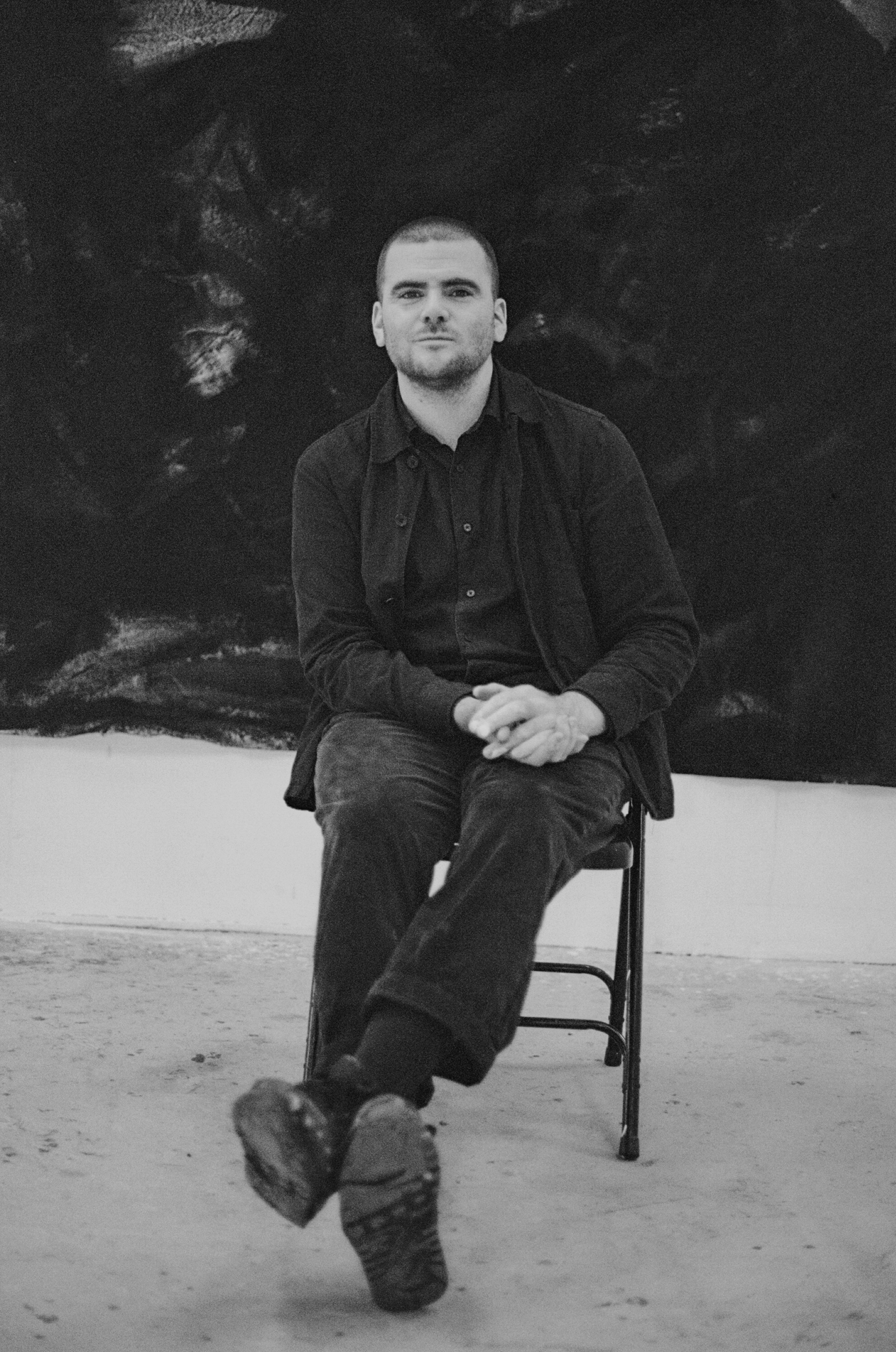
Tomas Spicer Interviewed by APSARA
‘I left school unable to read and write, and that’s probably been the biggest privilege or luxury of my life.’
Tom, could you tell us in what you are presenting at Apsara?
What I’m presenting at Apsara is drawing, and I think of everything that I do as drawing, in a kind of literal sense or an expanded sense. Drawing’s the center of the practice, and it’s the most immediate way to transmit an idea out into the world. And, you know, in this time of huge technological advancements and the speed of information, it’s still incredible to me that something that is, on one hand, as immediate, bodily, or old-fashioned as a drawing still holds up as this kind of immediate form of ideational transmission.
And there’s something so beautiful and accessible about drawing. You know, the materials and what you require to draw are so simple: a piece of pencil and a piece of paper, or a stick in the sand, or when you’re young and you’re in the back of the car and it’s a bit misty and you use your finger to draw on the glass. It’s this immediate, hyper-accessible, true kind of thing.
Could you speak about your early experiences — learning outside formal structures and growing up around drawing and architecture in your family have shaped your practice?
I think there’s a kind of neurodivergent thing, which is that I don’t think of ideas one at a time. I don’t really think one at a time. I kind of think all at once, so all the answers to that question could arrive at the same time. They’re not sequential or time-based, and they’re not on top of each other. It’s like a mind map. It’s like a “with-ness” kind of quality.
I think about it as having spent my youth learning how not to read and write. I think I actively tried to learn how not to read and write, and I think there were barriers to learning. I think it’s very easy, as a form of self-preservation, when you’re a young person in an institution that’s expecting certain things of you and making judgments about your ability to participate within those systems. If you feel like you’re failing within that, you can feel shame, or you can feel all these sorts of things, or you can try and find a way out. So I think of it as learning how not to read.
It’s a bit like when there’s something that you want but you can’t get it. Sometimes it’s easier to decide and convince yourself that you never wanted it anyway. So reading was always a struggle, but that didn’t mean that I didn’t want to learn. I think what it did was cause a certain type of attention, a certain relationship to looking, and definitely a certain relationship to listening.
Most of my ideas come from oral transmission, or things people say, or they come from looking and slow looking. The great thing about looking is that it’s inexhaustible, so it’s like a book without an end. I don’t think you can ever fully see something in its totality. Really, the more you look, the more you see; the more you look, the more you see. And the more you think, the more you think, it starts to change how you look and how you see. So the more time you spend looking at a painting or a drawing, it keeps on becoming new again. I think there’s something very beautiful about that.
I left school unable to read and write, and that’s probably been the biggest privilege or luxury of my life. Although it was hard, or is hard, it kind of shaped my interest, and it gave me something that I can’t get out of books or can’t really get from others. Because what do you speak about? You speak about things that you know intimately. You speak about things that are true to you. You speak about things that you know in a felt way.
It’s kind of interesting because, although I’ve been to these amazing institutions like Central Saint Martins, UCL, or Goldsmiths – and I’m not speaking ill of those places or that kind of academic rigor, I think it’s beautiful – equally I was never able to fully participate in or access them, even from inside of them. Inside them, I did get a huge amount from them, and tutors like Simon Martin and Sadie Murdoch were incredible. What really mattered were the conversations. The conversations with the other students were the thing. It was the talking. That was my kind of entry into the whole thing.
I was lucky to grow up in a house where art was a celebrated thing and drawing was a celebrated thing. My dad, as an architect, had a certain relationship to drawing, and I could see how spatial ideas were communicated through two-dimensional surfaces and through the simple things of pencils and paper. Architectural space and buildings are kind of like these dreamlike things, these really complicated, wonderful things, and he could bring them to life on a page. That was fascinating to me. It’s super imaginative.
My granddad was a landscape painter, and my mum was the daughter of this painter, and his work was on the walls of our house and all of our family’s houses, and they were always celebrated. So for me, as a young person feeling like I was not doing well in life, not achieving or getting into trouble all the time, I knew that if I could make something that could go in a frame and be in the house, then I could be celebrated, and I could maybe change that narrative.
There was another thing to do with institutions and drawing and this whole backdrop, which includes Goldsmiths and places like that. I think there’s a problem in how we think about knowledge and access and what it’s there for, or about forms of knowing. Scientific materialism, although brilliant and responsible for so many things in terms of understanding the world, the universe, language, and so on, can also distance us from a kind of true knowing. There’s a blind spot in it. Knowing things in an epistemological way is different from an ontological kind of knowing, if I’m saying that correctly.
The categorization of things and the containing of them as a way of knowing them actually distances us from them in a way. It’s not like feeling them. It’s not like knowing them in a felt, embodied way. I sometimes wonder about that. Do we know how to know things properly? There are so many things that we know about in the world that are crazy and wrong, and we don’t do anything about them. We know them, but we don’t know them in a way that brings us to tears or causes action. So I wonder about the quality of the sort of knowing that we have, and what it does in a felt way.
How does your practice position itself in relation to inherited forms of knowledge?
Inherited forms of knowledge. How do I position myself? How does the practice position itself in regard to inherited forms of knowledge? That’s interesting. I think sometimes people think of the work in that way, as if I’m appropriating a kind of childish aesthetic type of thing, and I don’t. That sounds strange to me, because I was a child once. So I’m not really appropriating it. It’s like the beginning of my life. It’s the space that I inhabited. It’s where I’ve emerged from, being a child. So I don’t think I’m appropriating a childish aesthetic. I think I’m listening to the inner child in me and trying to think about that. Or I’m looking at my son. I had a son whilst I was at Goldsmiths, and my relationship to him is very, very present in the work. And maybe that’s the opposite of inheritance in a kind of linear, straight-line, time-based way. But there’s also something interesting to think about in relation to time and inheritance and how that works.
And then when talking about my dad, or talking about my granddad or my family, there’s an inherited kind of thing. Or when talking about the structure of academic contexts and the canon of art and things like that, there’s a lot of weight in that idea of what’s inherited, and it depends on your position and how you think about things.
I think sometimes when I draw, I can see my hands and they look like my granddad’s hands. And sometimes I think when a drawing is going well, maybe he’s drawing through my hands. There’s something nice in that, something quite steadying in that. I think autobiography, and trying to bring that experience into the work, is something that the work inherits from the maker, in a sense.
And the work is made for these unknown others, these unknown people. I’m in the studio making these works, knowing that they’re for an audience, but I don’t know who they’ll be. So in the future the work will inherit some sort of context or perspective related to the time and the people who encounter it, and it will inherit that from them. Maybe inheritance works in two directions.
It’s a really good question. I think the phrasing of it, the word inheritance, is interesting because it’s connected to family. It often has something to do with that. In some strange way it also makes me think of my granddad and my uncle. I think my uncle wrote a poem called No Probate, or maybe it was my granddad who wrote a poem called No Probate. And it was about inheritance. It was about legacy. It was about those kinds of things. And I think about making these works and hoping that they have a life in the world and do something, like an offering outward.
It’s kind of a confusing one for me. Maybe I’ve taken it into the wrong space or angle. Inherited forms of knowledge. Maybe it has to do with context, and that contextual space related to learning and assembling meaning and language is itself something inherited. I’m not sure how my work sits in relation to that. Maybe it’s all in the reading. Maybe it’s all in what people bring to the work, and that being a kind of inherited thing that gets assembled around it.
Following your title, when you speak about painting as correspondence rather than delivery, what kind of exchanges are taking place?
Correspondence, in a kind of neurodivergent, all-at-once kind of way, without a kind of straight line cutting through things. I think of correspondence in so many ways, and coming up with a title for a show is about listening deeply to what’s happening in the work, trying to figure out the spaces where the work is coming from, and correspondence shows up in a huge amount of ways.
I think about making work in the studio, you know, on my own quite a lot, and I know I’m making these works, and I know I’m making them for someone. I know I want them to be seen. I know I’m making them for an audience, and I’m thinking about those people in a way. When I’m making what I’m making, I’m not making it for them. So I’m making it with them in mind. Whether someone finds one of these, whether they encounter it in a charity shop or in a museum, it’s still the same kind of intention. And then also you’re making them kind of for me in the studio. It’s to do with me talking to myself, talking to my past, listening to things, feeling my way through whether things work or whether they don’t. And that’s a very intimate form of correspondence with the self.
I’ve mentioned parenthood and this idea of maybe aesthetics around what people would term as naive or childlike. So I’m talking with my past. I’m talking with my present. I’m talking with my future. And, you know, art does a strange thing with time, or to time or through time, because it’s made in time. It takes time to make it. It then kind of travels through time, and it kind of pauses time. So it takes time to make. Once it’s made, it’s frozen, and then it travels through time. So it has this kind of strange correspondence with time in that way, in terms of how it travels and the different sorts of constructs it inhabits in relation to time, and a conversation with time.
So, Gema, something else I was thinking: also the work is like – there are lots of diptychs in the work. There’s lots of work shown together, side by side. And that’s a direct kind of conversational, correspondence kind of thing in terms of presentation or exhibition-making. So there’s a dialogue there between works, and a dialogue that can be read in some way.
I think about the materials of pencil and paper being things that we’re taught to learn how to write with, and thinking of these things as kind of letters that I’m writing to this unknown future, to these unknown people, to versions of myself, to my son, to my granddad, all at the same time. So it kind of overlaps. And, you know, you don’t know where they’re going, these letters that you write in the studio and send out into time.
I’ve been writing a lot of letters recently to my best friend, who I grew up with. He’s my brother, and he’s an artist, and I love him dearly, and he’s far away. And I write letters to him a lot, and none of them have made their way to him so far, for one reason or another, I’m not sure. But I’m writing the letters and I’m putting them in the post box, and they get sent out, and they’re not making their way to him. Maybe they’re getting lost in transit or something. So it’s very present to me in my life, and I feel it’s a form of correspondence. And I feel like in the studio I’m writing these letters and sending them out, and I don’t know where they’re going.
So there’s a kind of analogy there that just feels quite true. And that’s the sort of things I look for or listen to when making work. It’s all of those things all at once, and it’s not one thing in a privileged way against another. It’s like it’s all of those bits that make me feel like, you know, then you have all that stuff in your head, and you have to come up with a title for a show, and you come up with the title Correspondence.
In our conversations, you mentioned the idea of “not knowing” — not as a lack of knowledge but as a working method. How does this operate in your paintings?
I would say everything is a drawing. I know they use paint, and sometimes I even refer to them as paintings, but I think that’s all drawing. I want to try and remind myself to think of everything I do as drawing.
Not knowing is a great thing. It’s something that’s coming more with age. Improvisation is a very powerful form, and that sometimes involves some sort of risk. But I think when works feel successful to me is when I feel a little bit like I haven’t made them, which might sound like a strange thing to want to achieve in a studio on your own making things. But there’s something to do with what the works are about or why they’re trying to do what they do.
And I think of myself as a young person not knowing and not being able to participate in formal educational reading or writing, and I think that was quite a generative thing for me. I don’t think it was a failure in any way. I think it was a really special experience, and I don’t think of that in a weird way. They’re not figurative drawings, but they are kind of representational, and their representation is literal. The pencil is there to be a pencil. The paint is there to be paint. The movements are there to be the movements and the record of the hand.
And then I don’t really know the rest, and I don’t really want to know too much. I can be sure of things from a space of feeling. I can feel that these things are right and they are true for me in a good, real way. But that doesn’t mean I have to really be able to know them or explain them. I think it’s like love. When you fall in love with some place, person, or thing, you can’t ever fully grasp it or explain why. You don’t really know, and that’s what makes it love. That’s what makes it true. That’s what makes it real. The fact that when you try to explain it fully, it kind of slips through your fingers.
So I don’t want to fully know my work, really. I want to be able to encounter it and get something new from it and find that in the making. And I want that for an audience as well. They’re not easy-to-read things. They’re not overly descriptive. They don’t overtly make themselves known or tell you what they are, or try to convince you what they’re about. But they expect, in a kind way, in a difficult kind of way, they expect things of the viewer. I want people to look at them and have to do some work, and have to assemble some meaning, and have to construct some sort of literacy around them. I want them to try and figure out how to read them.
And I think that’s an offer of the work. And, you know, for me as a young person learning how not to read and finding that difficult, I like the idea of presenting that experience to others and being part of the process of them grappling with it and coming up with things. Because I think the more you look, the more you see; the more you see, the more you think; and the more you think, the more the way you feel can change the way you see things. And if you can change the way you see things, and an artwork can help along in that process, then that’s a good thing. Because maybe there are some sorts of changes that are needed, and maybe something as simple as a drawing – something as simple as lead on a piece of paper – in a simple, understated way, maybe there’s something in that.
Thank you so much, Tom!
Tomas Spicer (b. 1988, London, UK) studied Fine Art at Central Saint Martins, University of the Arts London (2010–2014), and holds an MFA from Goldsmiths, University of London (2025). Recent exhibitions include Frieze Week Studio Brunch (Space Studios, London, 2025), The Scalpel Presentation (The Maffioli Art Group, London, 2025), The Many Joys of Language (Goldsmiths MFA Degree Show, London, 2025), Freedom Verses (House Work Presents, London, 2024), Low Level Readers, and Between You and Me (Goldsmiths MFA Studios, London, 2024). His work is held in private collections internationally. Recent publications include the artist book Untitled Drawings (Tomas Spicer Studio, London, 2025).