
‘Tidelands’
Begüm Yamanlar
Presented by Apsara Studio
October 16- Nov 1, 2026. Apsara Studio, 200 Battersea Park Rd, SW11 4ND London
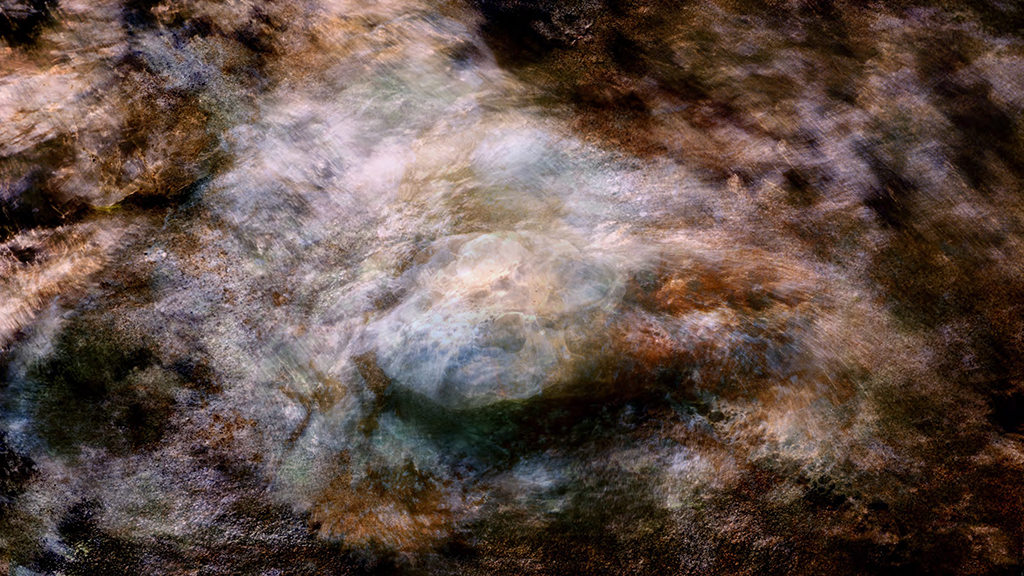
Begüm Yamanlar, Khora, from the series ‘Sedimentations’, 2025
Tidelands is the first solo show of artist Begüm Yamanlar in London. The exhibition brings together some of her most recent works from The Aquifer, Notes on Becoming, KHORA: Sedimentations, and Where the Sea Ends. Across these series, Yamanlar engages with transitional territories in which time, matter and memory do not appear as stable forms, but as configurations shaped by processes of withdrawal, sedimentation, and transformation.
Working across photography, video, and installation, Yamanlar produces speculative images that operate as fields of reconstruction. Different temporalities, geographies, and materialities are multilayered, displaced, and reorganised, opening the photographic image to relations that exceed representation. Photography ceases to function as a trustworthy record of the past, instead becoming a space in which memory can be reactivated and meaning continually reconfigured in the present.
The title of the exhibition reflects a long-term line of inquiry within Yamanlar’s practice. Tidelands takes its point of departure from intertidal zones, territories continually reshaped by the movement of water, to name a condition that runs through the works: forms, memories, and territories that exist in provisional states. The intertidal emerges here as a threshold space, suspended between presence and absence, appearance and disappearance, between what becomes visible and what remains beyond the limits of human perception.
This condition unfolds across different scales within the exhibition. In The Aquifer, a domestic interior becomes a space shaped by the recession of water, memory, and lived time. In KHORA: Sedimentations, this logic expands towards a geological and planetary dimension through composite landscapes made from fragments of water, fire, mist, and sediment drawn from different places and moments. Across these temporal and geographical scales, Yamanlar brings intimate experience into relation with ecological and material processes that unfold beyond human temporalities. There is also a pervading reference to the sublime, the 18th century concept of reconstructed reality, casting a glow on how this is a shifting state, rather than one that is definite in its being.
Water runs through these works as matter, agent, and structure of thought. Its ability to conceal, carry, erode, deposit, and reveal allows it to be understood as a living and unstable archive: capable of holding traces of life, memory, and materiality, while also displacing and transforming them. Its movement not only alters the surfaces it passes through, but also changes the conditions under which something can appear, persist, or disappear.
Ultimately, Tidelands occupies that threshold in which forms remain fully unsettled. Rather than preserving what disappears, the exhibition attends to the traces, displacements, and relations that emerge in the passage from one state to another, proposing landscape, the mnemonic and the molecular as open, porous, and continually becoming.
Begüm Yamanlar Interviewed by APSARA
‘I generally work with photography not as a tool for recording the past, but as a material through which I can construct speculative landscapes and possible future scenarios.’
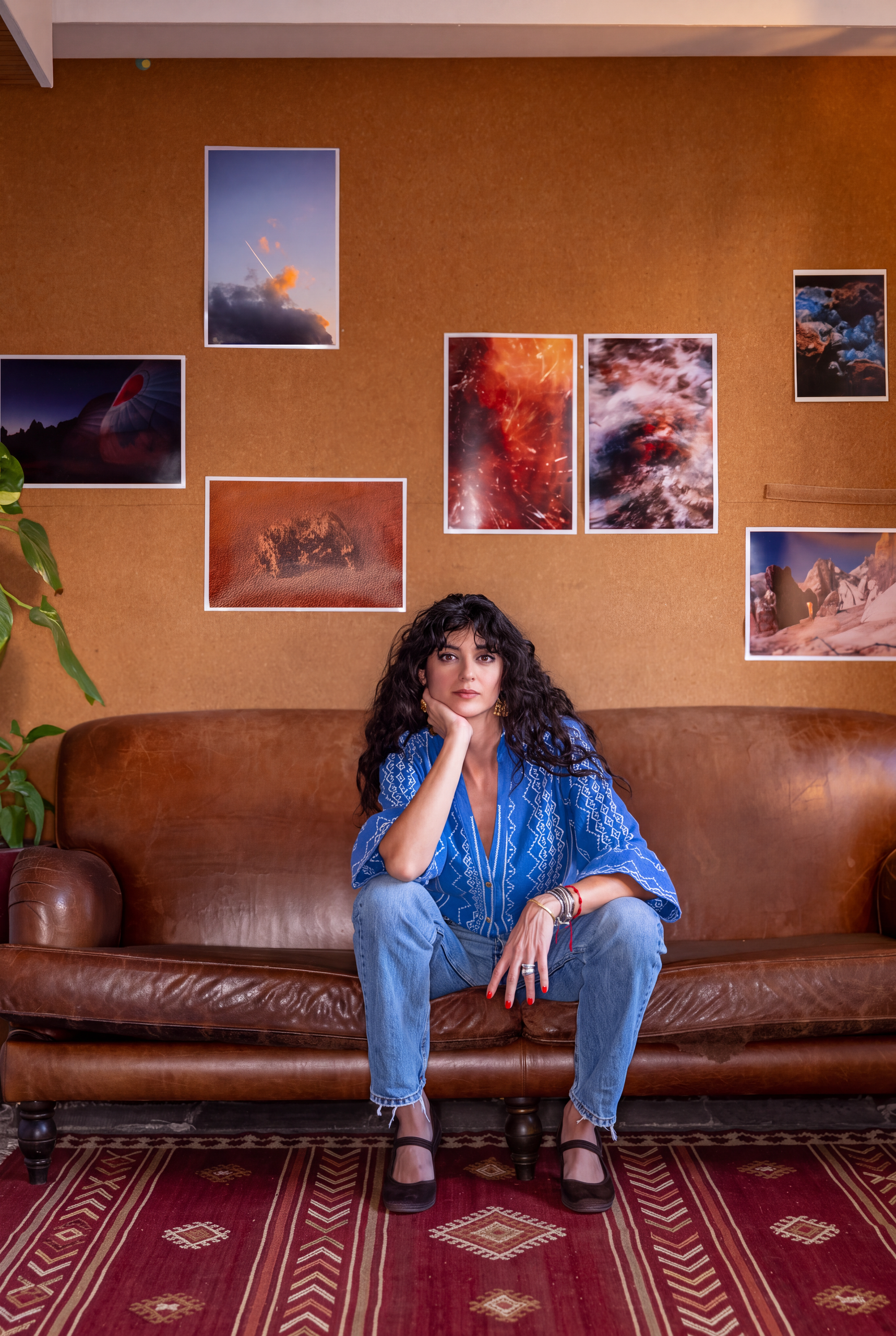
Begüm, Tidelands is your first solo exhibition in London and brings together works from different periods and series. Could you give us a sense of what we will encounter in the exhibition, and what the title Tidelands means to you?
Tidelands brings together The Aquifer, a video installation, and photographic works from Khora: Sedimentations and Where The Sea Ends series. Although the works emerged at different moments, they belong to a longer inquiry in my practice into water, disappearance, and the slow ecological and material transformations that often remain beyond immediate perception. In The Aquifer, these ideas unfold through an interior space encountered as water recedes, carrying traces of memory, absence, and lived time. In Sedimentations, they expand across geological scales through composite landscapes formed from fragmented images of water, fire, mist, and sediment. Together, the works move between intimate and planetary perspectives, continually returning to the tidal movement of water, both as a physical process and as a way of thinking through memory and the fluidity of becoming.
Tidelands are transitional areas shaped by the continual movement of water,neither entirely land nor water, but territories where things are deposited, exposed, concealed, and transformed. For me, the title describes both the physical and conceptual space of the exhibition: a threshold where different temporalities and material states coexist, and where elemental forces emerge not as passive backgrounds but as active agents with their own rhythms, histories, and capacities for transformation.
Water, sediment, memory, disappearance and ecological transformation recur throughout your practice, alongside a sustained engagement with research. Could you tell us a little about your working methodology, and how theory and practice inform one another?
My methodology often begins with observation and the accumulation of images across different times and geographies. I photograph water, mist, fire, sediment, urban surfaces, and other material traces, without necessarily knowing how they will eventually come together. In the studio, I treat these photographs as material rather than as records of fixed moments. Through layering many different photographs (sometimes more than 30-35 layered fragments to create a single landscape), fragmentation, and temporal displacement, they gradually form composite spaces in which different environments and durations coexist in a single image. Video extends this process through movement, repetition, and sound, allowing still images to enter another temporality.
The work therefore develops slowly and intuitively, through an ongoing exchange between collecting, researching, making, and returning to the images. Research has always been closely connected to this process. My doctoral research, titled The Sublime in Waterscapes, I examined how representations and perceptions of water have shifted in relation to ecological change and technological mediation. This research led me further into posthumanist and ecological thought, particularly ideas of transcorporeality, material agency, and hyperobjects. However, I do not use theory to illustrate a predetermined idea. Theory gives me ways to recognise and articulate questions that are already emerging through the material, while the process of making often complicates or redirects the research. The two develop together over time, much like sedimentation itself: through accumulation, erosion, recurrence, and transformation.
The photographic image remains central to your practice, but your work also extends into video and installation. In your own research, you describe photography as something that can move beyond representation and enter into new relationships and contexts. What possibilities does thinking about photography as an “expanded field” open up for you?
I generally work with photography not as a tool for recording the past, but as a material through which I can construct speculative landscapes and possible future scenarios. My approach is often painterly: I build images gradually by adding, removing, and adjusting layers until different times, geographies, and material states begin to coexist. Thinking about photography as an expanded field allows me to move beyond the idea of the photograph as a self-contained image or a record of a single moment. I am interested in what happens when a photograph is layered, fragmented, animated, projected, repeated, or placed in relation to sound, objects, and architecture. This loosens photography’s conventional relationship to linear time and direct representation, while still retaining its connection to something that has existed before the lens.
Video and installation allow me to extend this inquiry spatially and temporally. By animating composite photographs frame by frame, I move the still image into another temporality, where subtle shifts, repetitions, and transformations can gradually unfold. Installation introduces further relationships through scale, surface, light, duration, and the movement of the viewer through space. For me, the expanded field does not mean leaving photography behind; it means allowing the photographic image to become more fluid and relational.
Your images often seem to occupy an in-between space across documentation and fiction. What does the speculative image mean in your practice?
For me, the speculative image is a way of approaching realities that cannot be fully contained within a documentary image. I grew up and continue to live in Istanbul, a city where water, urban memory, political change, and ecological vulnerability are constantly intertwined. The Bosphorus can appear permanent, yet it carries histories of civilizations, migrations, destruction, construction, and environmental change. This has shaped how I look at landscapes: not as stable places, but as spaces in which different times, bodies, and material histories coexist. By combining photographs taken across different moments and geographies, I create images that hover between what has existed, what is remembered, and what might emerge. Speculation allows me to make slow or dispersed transformations, such as ecological loss, rising or receding waters, and the gradual disappearance of places, temporarily perceptible. It is therefore less about predicting the future than questioning how the present is constructed, whose histories remain visible, and how we might imagine existence beyond a solely human perspective.
Thanks Begüm!
Begüm Yamanlar is an artist and academic specializing in photography and video art. She holds a PhD in Cinema and Media Research and a BA in Photography and Video from Bahçeşehir University, and an MA in Visual Arts from Sabancı University. Her doctoral research focused on the sublime in waterscapes in contemporary art. Currently, she is lecturing on Visual Arts, Photography, and Video Art at Istanbul Bilgi University in Istanbul. Her works have been showcased in solo exhibitions, including Gallery Zilberman, Öktem Aykut Gallery, and Şerefiye Cistern. She has participated in numerous group exhibitions at international art institutions such as Istanbul Modern (‘Panorama: Dreams and Places’, ‘Close Quarters’), ArtCOP in France, Landskrona Museum (‘Istanbul Modern – Landskrona’), and the Museum of Contemporary Art and Design in the Philippines (‘The Surface of the World: Architecture and the Moving Image’). Recent and selected exhibitions include Marés (Menorca, Spain), TERRA (Beaune, France), Yesterday Today Istanbul at Sabancı Museum, Rounded by Sleep at Arter, and Grief & Pleasure at Odunpazarı Modern Museum (OMM). Her work is part of public and private collections, including the permanent collection of Istanbul Modern. In 2025, she was an artist-in-residence at Cité Internationale des Arts in Paris, further advancing her artistic research. Her ongoing practice explores material and immaterial landscapes through composite photography and moving image, reflecting on large-scale ecological transformations.